During the morning shift at Little Myanmar, a small restaurant on The New York Times’ 100 best restaurants list, one single restaurant worker handles the role of server, waiter, and chef. The restaurant is nestled between a coffee shop and an empty building in the Lower East Side of New York City, away from foot traffic.
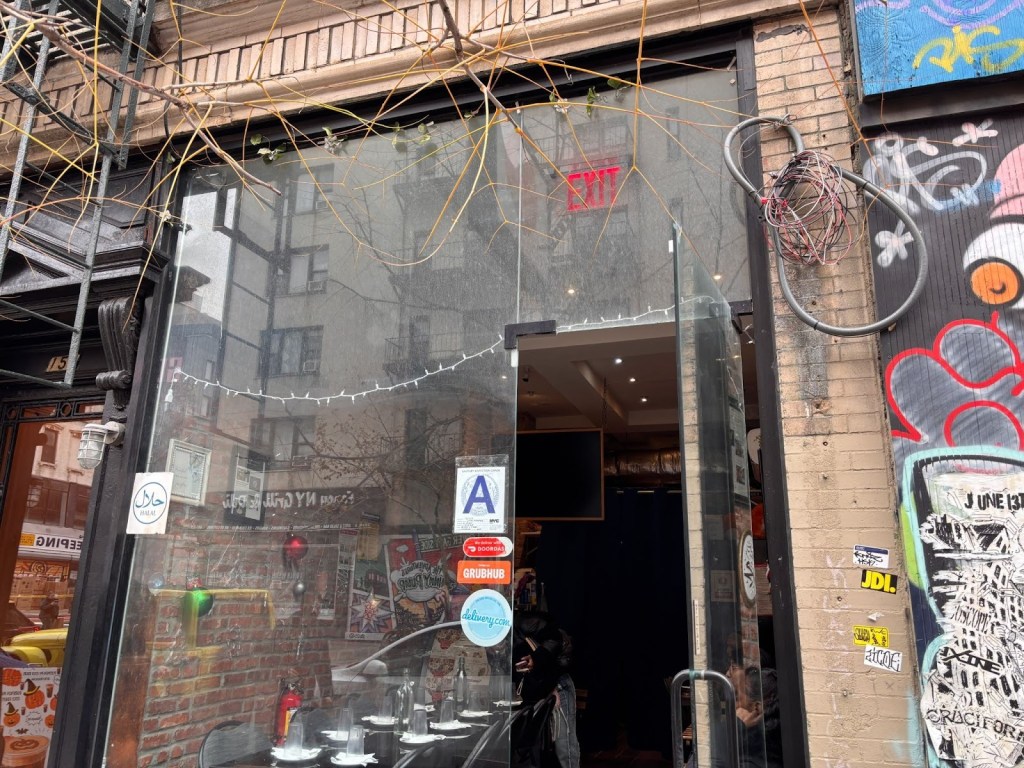
Little Myanmar, located in the Lower East Side of New York City. Photo by Juan Diego Ramirez.
The tactic of having one employee working in the morning is unusual for them, but at a time when restaurants are trying to stay afloat, at Little Myanmar, workers find ways to save payroll. That’s because the Trump tariffs on international imports rolled out earlier in the year are affecting the way small businesses across the city operate.
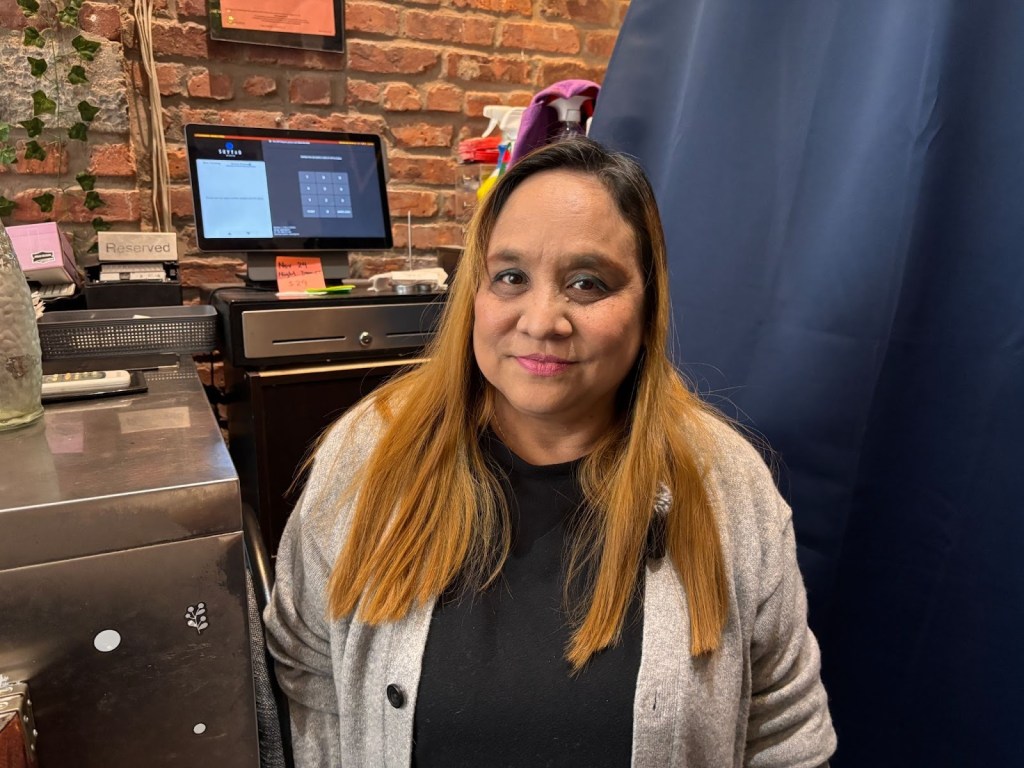
Thyar Kyar, the owner of Little Myanmar. Photo by Juan Dieg Ramirez
Thyar Kyar, the owner of Little Myanmar, has to import many of her ingredients monthly.
“Chickpeas, they’re coming from Myanmar. Ginger, curry, and chili I bring from Myanmar,” said Kyar.
And importing ingredients that can’t be harvested in the U.S. is costing small businesses like Kyar’s a high price.
“I used to spend 800 dollars, below 1,000 dollars (a month). Now I spend a little bit more, almost double. I spent maybe 2,000 dollars,” she said.
Back in April, President Donald Trump declared a national emergency and imposed a ten percent tariff on imports to the country under the International Emergency Economic Powers Act. That has created a domino effect on the whole restaurant industry.
Kyar is not alone. In Kips Bay, Esam Ewees, who runs The Prince of Egypt halal cart, is also feeling the effects. He buys his meat and vegetables from local suppliers, but they are far more expensive than pre-pandemic prices, and the tariff has made it hard for his prices to stay steady, which is bad for business. Ewees does not rely on imported ingredients, but he depends on the cost of the imported food packaging, which comes from overseas.
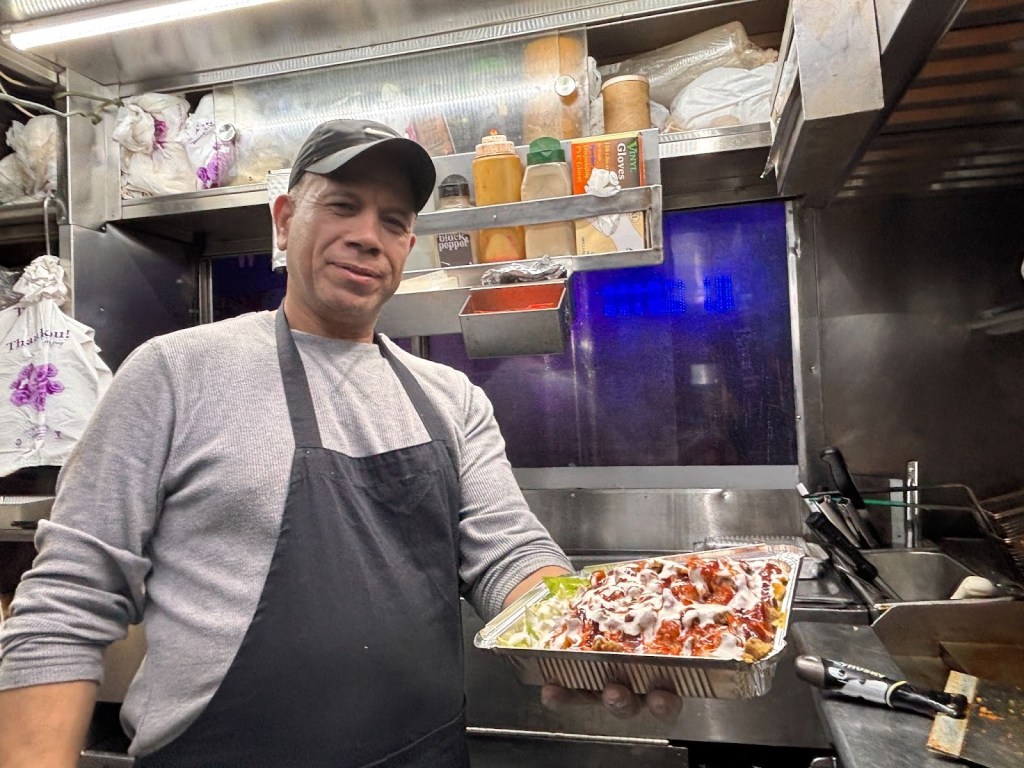
Esam Ewees, owner of The Prince of Egypt halal cart in Kips Bay. Photo by Juan Diego Ramirez.
“All the stuff went up. The plates. I bought the plates for 30 dollars. Now the box is like 85 dollars. Too much money,” he said while cooking food inside his cart.
Ewees says that even without importing his ingredients, he still gets a hit. His suppliers are raising the prices of some of the products he needs. He says the farmers are feeling the pressure and are passing the added costs on to him.
“The lettuce, one piece, is about four dollars or 82 dollars a box. The farmers are losing the money too,” He said.

Patrick Saintclair, CEO of Atlantic Agri Imports. Photo by Atlantic Agri Imports.
Patrick Saintclair, CEO of Atlantic Agri Imports, a family-owned food supplier based in New Jersey, says that half of the product he sells comes from other countries.
“We get our jasmine rice from Thailand. We get the basmati rice from India. We import from Egypt, so those products are definitely impacted,” he said.
Saitclair said he used to pay six percent of tariffs on Jasmine rice since he started the business back in 2009. Now, due to the Trump tariffs, he is paying 30 percent on top of that.

Atlantic Agri Imports warehouse in New Jersey. Photo by Patrick Saintclair.
“We’re really getting hurt because of that additional tariff. That’s why a lot of importers like myself have either stopped importing the rice from India altogether or have drastically reduced the volume that we’re bringing in,” he said.
And his experience matches how tariffs function in practice. When a foreign country puts products on a ship at a port in the U.S., whoever is pulling the product from the port is the one who is paying the tariff.
To avoid losing customers, Saintclair says he has been forced to absorb the rising costs, and for small business owners, that is not sustainable.
“If they don’t reverse the tariffs, there will definitely be food inflation. The importers can absorb some of the price increase because they don’t want to lose customers. But they can’t keep on doing that month after month,” said Asli Leblebicioglu, an International Economics professor at Baruch College.

Asli Leblebicioglu, International Economics Professor at Baruch College. Photo via LinkedIn.
“It’s highly likely that one way for the businesses to save costs and to be able to keep on operating is to minimize the necessary labor. If they have to import necessary ingredients to be able to cook, it almost becomes like they have to cut back on labor. They have to cut costs on other elements, and labor potentially is one,” she said.
In the meantime, a local approach to help small businesses is in the works. The incoming city mayor, Zohran Mamdani, plans to create the Mom and Pop Czar, an office to help small businesses, including restaurants, ease the financial pressures the city puts on them.
“Compliance is incredibly important; punishment is not,” Mamdani told food influencer Jakie Cho, during an election campaign stop in Queens.
“Our job should be to get small businesses, get restaurants into compliance, not to try to fine them to fund a budget of 116 billion dollars,” he said.
But that won’t help tackle tariffs in the long run. That’s why Saintclair is looking towards the midterm elections.
“Everybody is waiting to see if the cards shift. We’re hoping that they do because if it doesn’t, then the outlook for the next 23 years it’s going to be really bleak. It’s going to be really bad for the market,” he said.
Until then, owners will continue to cut back wherever they can before they are forced to shut down operations.

 Juan Diego Ramirez
Leave a comment